Cofounders
Cofounder Compatibility: What to Check Before You Commit
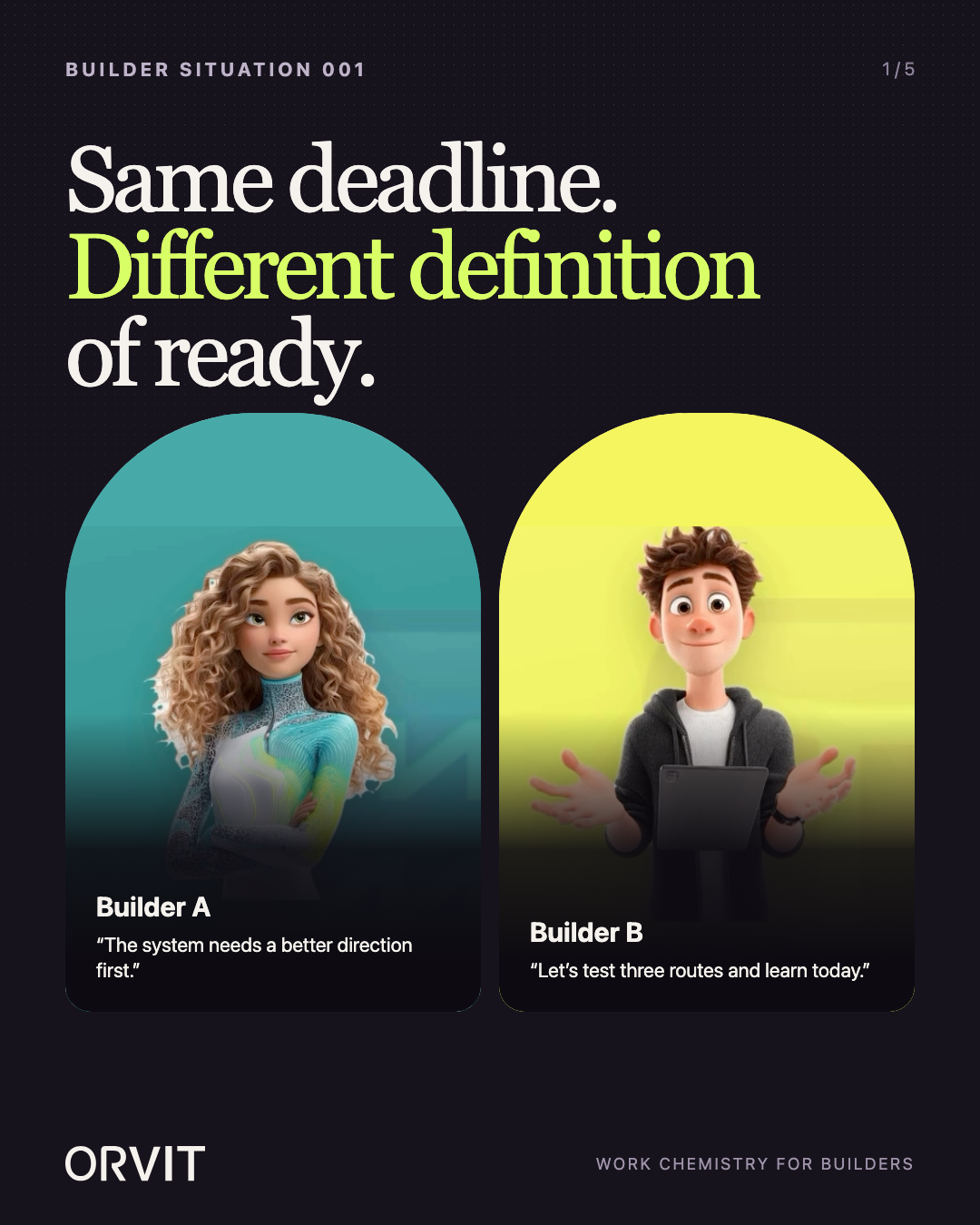
Most startups don't fail because the idea was wrong. They fail because the founding team fell apart. Before you commit to a cofounder or business partner, it's worth checking how you'll actually work together — not just whether you like each other.
Cofounder compatibility isn't about finding someone identical to you. The strongest teams pair different strengths. What matters is knowing where you complement each other, and where friction is likely — early enough to talk about it before equity, roles, and months of work are on the line.
Why cofounder compatibility matters
A cofounder relationship is closer to a marriage than a hire. You share ownership, decisions, stress, and risk for years. When it works, different perspectives create momentum. When it breaks, it can take the company down with it. Checking compatibility before you commit isn't pessimism — it's due diligence on the single most important relationship in your startup.
7 things to check before you commit
1. Working style and pace
Does one of you move fast and iterate, while the other wants to plan and get it right? Neither is wrong, but a mismatch in pace causes daily friction. Talk about how each of you likes to start, ship, and recover from mistakes.
2. How you make decisions
When you disagree, who decides? Do you want consensus, speed, or data? Decide in advance how you'll break ties — by domain ownership, by conviction, or by a clear tiebreaker. Unresolved decision-making is where most cofounder conflict starts.
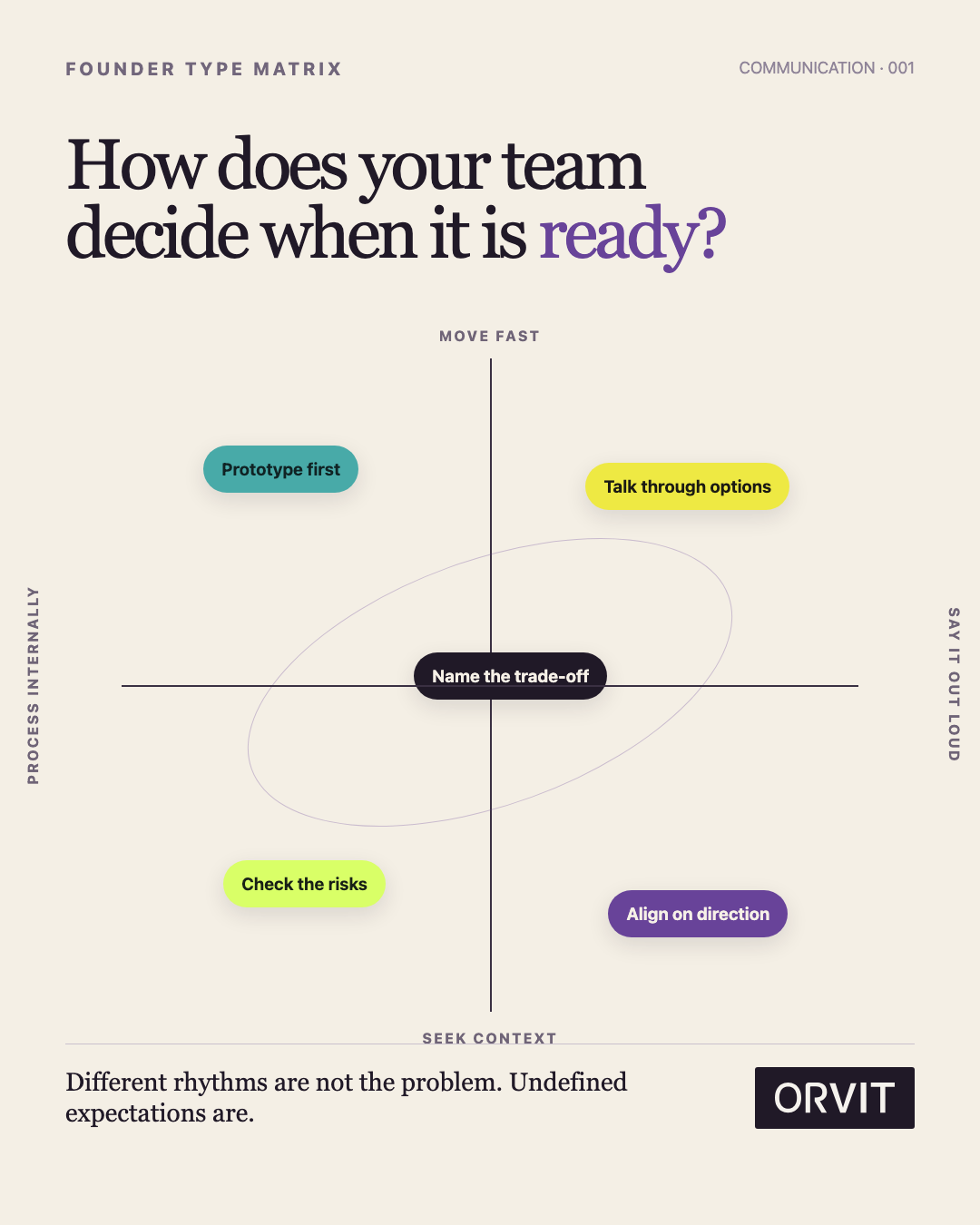
3. Communication
How direct is each of you? Do you say hard things early, or avoid conflict until it builds up? A partner who communicates differently isn't a red flag — but not knowing the difference is. Name it before it surprises you under pressure.
4. How you handle conflict
Disagreement is guaranteed. What matters is the pattern. Does one of you withdraw while the other pushes? Do you repair quickly or hold grudges? Ask directly: "When we disagree hard, how do you want to handle it?"
5. Values and long-term vision
Are you building the same company? Lifestyle business or venture-scale? Sell in three years or build for ten? Aligned skills with misaligned vision is a slow-motion breakup. Make sure your definitions of success actually match.
6. Roles, equity, and money
Who owns what? How is equity split, and does it vest? What happens if someone leaves? Money and roles feel awkward to discuss early — which is exactly why you should. A clear founder agreement protects the relationship, not just the cap table.
7. Commitment and risk tolerance
Is this full-time for both of you? How long can each of you go without income? Different runway and risk appetite can quietly pull a team apart. Align on how much each person is really putting in.
How to have the conversation early
None of this requires suspicion. Frame it as a working conversation: "Before we go all in, let's talk about how we each operate." The goal isn't to score your partner as good or bad — it's to surface the questions most teams discover too late, while they're still cheap to discuss.
Where ORVIT fits
This is exactly what ORVIT is built for. Instead of a dating-style match, ORVIT brings collaboration insights into the professional context. Your ORVIT Founder Type describes how you tend to communicate, decide, lead, and execute — and a Synergy Analysis explores how you and a potential cofounder may work together across communication, execution, leadership, growth, and conflict. It won't predict whether a partnership will succeed, but it gives you better questions to discuss before you commit. Read more in the FAQ.
The short checklist
- Working style and pace
- How you make decisions and break ties
- Communication style and directness
- How you each handle conflict
- Values and a shared definition of success
- Roles, equity split, vesting, and exit terms
- Commitment level and risk tolerance
Compatibility isn't the whole decision — skills, experience, references, and real trial work still matter. But checking how you'll work together, before you commit, is one of the highest-leverage things a founding team can do.
Check your work chemistry before you commit
See your ORVIT Founder Type and explore how you and a potential cofounder may work together.
Get ORVIT스타트업은 아이디어가 틀려서 실패하는 경우보다, 창업 팀이 무너져서 실패하는 경우가 훨씬 많습니다. 공동창업자나 동업자와 함께하기로 결정하기 전에, 단순히 사이가 좋은지가 아니라 실제로 어떻게 함께 일하게 될지를 확인하는 것이 중요합니다.
궁합이 좋다는 건 나와 똑같은 사람을 찾는 게 아닙니다. 강한 팀은 서로 다른 강점을 가진 사람들이 만듭니다. 중요한 건 어디서 서로를 보완하고, 어디서 마찰이 생길지를 — 지분과 역할, 몇 달의 시간이 걸리기 전에 — 미리 아는 것입니다.
동업자 궁합이 왜 중요한가
공동창업 관계는 채용보다 결혼에 가깝습니다. 몇 년 동안 소유권, 의사결정, 스트레스, 리스크를 함께 나눕니다. 잘 맞으면 서로 다른 관점이 추진력이 되지만, 어긋나면 회사까지 함께 무너질 수 있습니다. 함께하기 전에 궁합을 확인하는 건 의심이 아니라, 스타트업에서 가장 중요한 관계에 대한 최소한의 점검입니다.
동업 전 확인할 7가지
1. 일하는 방식과 속도
한 사람은 빠르게 움직이며 반복하고, 다른 한 사람은 계획을 세워 제대로 하려 하나요? 둘 다 틀리지 않았지만, 속도가 안 맞으면 매일 마찰이 생깁니다. 각자 어떻게 시작하고, 출시하고, 실수에서 회복하는지 이야기해 보세요.
2. 의사결정 방식
의견이 갈릴 때 누가 결정하나요? 합의를 원하나요, 속도를 원하나요, 데이터를 원하나요? 교착 상태를 어떻게 풀지 — 담당 영역별로, 확신의 강도로, 아니면 명확한 결정권자로 — 미리 정해두세요. 대부분의 동업자 갈등은 정리되지 않은 의사결정에서 시작됩니다.
3. 커뮤니케이션
각자 얼마나 직설적인가요? 힘든 이야기를 일찍 꺼내나요, 아니면 쌓일 때까지 갈등을 피하나요? 소통 방식이 다른 게 문제가 아니라, 그 차이를 모르는 게 문제입니다. 압박 상황에서 놀라기 전에 미리 짚어두세요.
4. 갈등을 다루는 방식
의견 충돌은 반드시 생깁니다. 중요한 건 패턴입니다. 한 사람이 밀어붙일 때 다른 사람은 물러서나요? 빨리 회복하나요, 아니면 앙금을 남기나요? 직접 물어보세요. "우리가 크게 부딪힐 때, 어떻게 풀고 싶어?"
5. 가치관과 장기 비전
같은 회사를 만들고 있나요? 라이프스타일 비즈니스인가요, 아니면 크게 키우는 벤처인가요? 3년 안에 매각인가요, 10년을 보고 짓는 건가요? 역량은 맞는데 비전이 어긋나면 서서히 갈라집니다. 각자의 '성공'의 정의가 실제로 같은지 확인하세요.
6. 역할, 지분, 돈
누가 무엇을 맡나요? 지분은 어떻게 나누고, 베스팅은 있나요? 한 사람이 떠나면 어떻게 되나요? 돈과 역할은 초반에 꺼내기 어색하지만, 그래서 더 미리 이야기해야 합니다. 명확한 창업자 합의는 지분표뿐 아니라 관계도 지켜줍니다.
7. 헌신도와 리스크 감수
둘 다 풀타임인가요? 각자 수입 없이 얼마나 버틸 수 있나요? 남은 자금과 리스크 성향이 다르면 팀은 조용히 갈라집니다. 각자 실제로 얼마나 걸고 있는지 맞춰보세요.
대화를 일찍 시작하는 법
이건 의심이 아닙니다. 업무 대화로 접근하세요. "본격적으로 하기 전에, 우리가 각자 어떻게 일하는지 이야기해 보자." 목표는 상대를 좋다/나쁘다로 채점하는 게 아니라, 대부분의 팀이 너무 늦게 발견하는 질문들을 아직 이야기하기 쉬울 때 꺼내는 것입니다.
ORVIT은 여기서 쓰입니다
ORVIT은 바로 이걸 위해 만들어졌습니다. 연애식 매칭이 아니라, 협업의 맥락으로 인사이트를 가져옵니다. ORVIT 파운더 타입은 내가 어떻게 소통하고, 결정하고, 이끌고, 실행하는지를 보여주고, 시너지 분석은 잠재적 공동창업자와 커뮤니케이션·실행·리더십·성장·갈등 다섯 영역에서 어떻게 함께 일하게 될지 살펴봅니다. 파트너십의 성공을 예측하지는 않지만, 함께하기 전에 확인할 더 나은 질문을 줍니다. 자세한 내용은 자주 묻는 질문에서 볼 수 있어요.
요약 체크리스트
- 일하는 방식과 속도
- 의사결정 방식과 교착 해소법
- 커뮤니케이션 스타일과 직설성
- 각자 갈등을 다루는 방식
- 가치관과 '성공'에 대한 공통된 정의
- 역할, 지분 분배, 베스팅, 이탈 조건
- 헌신도와 리스크 감수 성향
궁합이 결정의 전부는 아닙니다. 역량, 경험, 평판, 실제 테스트 협업도 여전히 중요합니다. 하지만 함께하기 전에 '어떻게 함께 일할지'를 확인하는 것은, 창업 팀이 할 수 있는 가장 효과적인 일 중 하나입니다.