Cofounders
How to Find a Cofounder
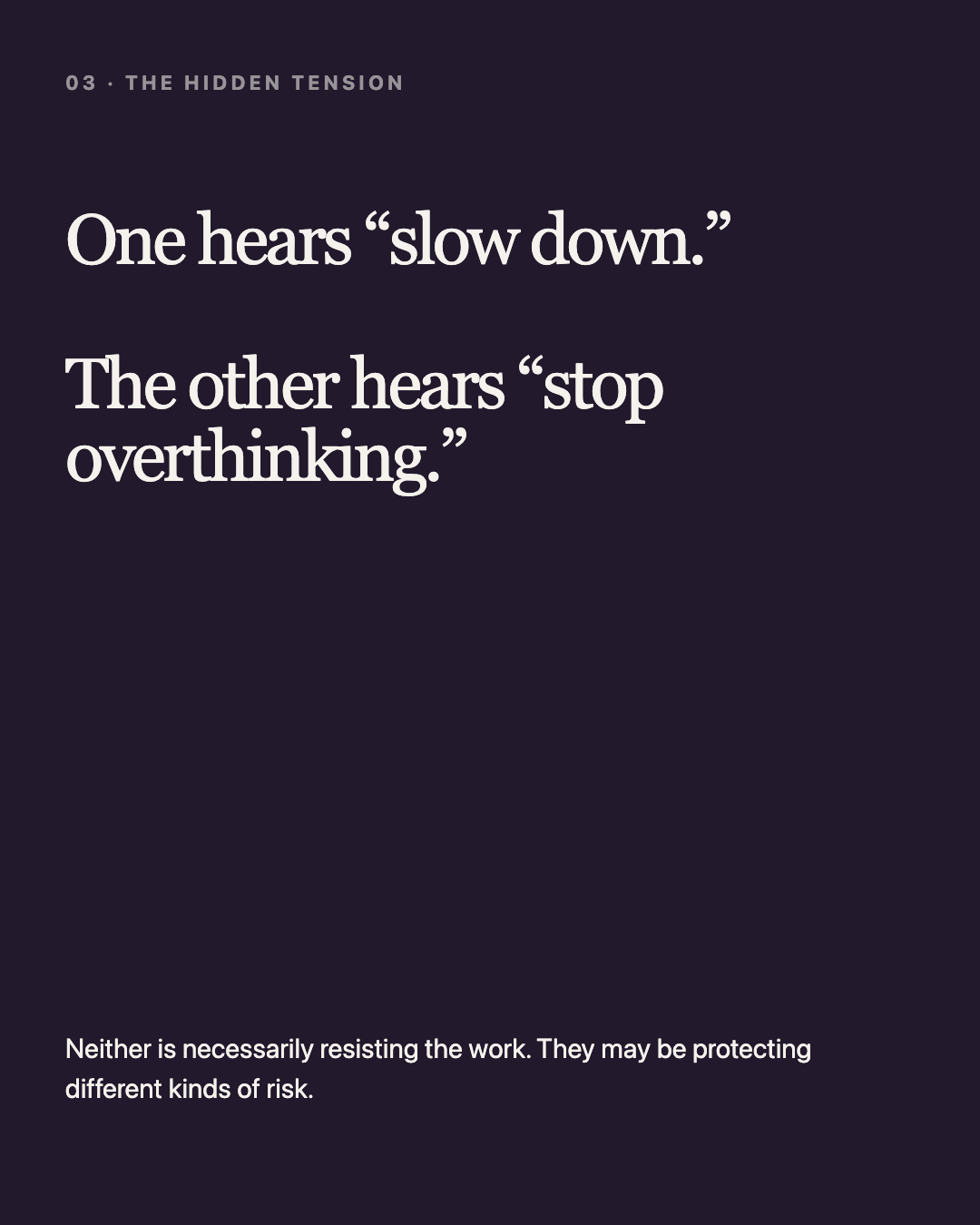
Most advice about finding a cofounder stops at "network more." That is not a plan. This is where founders actually meet, what to screen for before you spend real time, and how to test the fit before anyone signs anything.
The order matters. Finding candidates is the easy part — there are more people looking for a cofounder than there are good matches. The hard part is deciding quickly who is worth a month of your life, and doing it without either rushing into a partnership or interviewing strangers forever.
Where do people actually find cofounders?
There is no single best channel. Each one trades reach against signal — the places with the most people tell you the least about how someone works, and the places that show you real work have the fewest people in them.
Run two or three in parallel rather than exhausting one. The goal is not a big funnel — it is enough candidates that you can afford to say no.
What to screen for first
Before working style, before values, before any of the seven areas in our compatibility checklist, three things decide whether a conversation is worth continuing.
1. Complementary, not similar
Two people who are good at the same thing will agree pleasantly and leave the same gap unfilled. The question is not "do we get along" but "does this person cover what I am bad at, and do I cover theirs?" If you cannot name the gap they fill in one sentence, you have not found a cofounder — you have found a friend who likes your idea.
2. A shared definition of success
Lifestyle business or venture scale. Sell in three years or build for ten. These are not details to work out later; they determine every decision you will make together. Ask early, ask plainly, and listen for a real answer rather than the one they think you want.
3. Evidence they finish things
Ideas are cheap and enthusiasm is abundant. Shipped work is neither. Ask what they have finished — not started, finished — and what it cost them. Someone with one modest completed project is a better bet than someone with five brilliant abandoned ones.
How to reach out to someone you don't know
Cold outreach fails when it asks for too much too early. You are not proposing a partnership in the first message; you are proposing a conversation.
A message that works: one line on how you found them, one line on what you are building, one specific thing about their work that made you write, and a small ask — a 20-minute call, not a commitment. Four sentences. No deck.
What kills a first message: a long pitch, a request for an NDA, "I have the idea, I just need a technical cofounder," and anything that reads as if it went to fifty people. The last one is the most common and the easiest to avoid.
Run a two-week trial before you commit
Nothing you learn in conversation survives contact with a deadline. Before equity, before titles, build something small together.
- Pick something real but smallA landing page, a working prototype, ten customer interviews. Scoped so it can actually finish in two weeks.
- Split it so you each own something end to endShared ownership of everything hides who actually drives. Separate ownership shows it in days.
- Set one hard deadline and keep itHow each of you behaves in the last 48 hours is the most useful signal you will get.
- Have one disagreement on purposePick a real decision and argue it out. You need to see the pattern before it costs something.
- Debrief honestly at the endWhat was harder than expected? What would you change about how we worked? A partner who cannot answer this now will not answer it in year two either.
Two weeks is enough to see pace, communication under pressure, and whether they finish. It is short enough that walking away costs almost nothing — which is exactly why it works.
Where ORVIT fits
ORVIT sits at the screening step. Instead of a dating-style match, it brings collaboration insight into the professional context: your ORVIT Founder Type describes how you tend to communicate, decide, lead, and execute, and a Synergy Analysis looks at how you and a potential cofounder may work together across communication, execution, leadership, growth, and conflict.
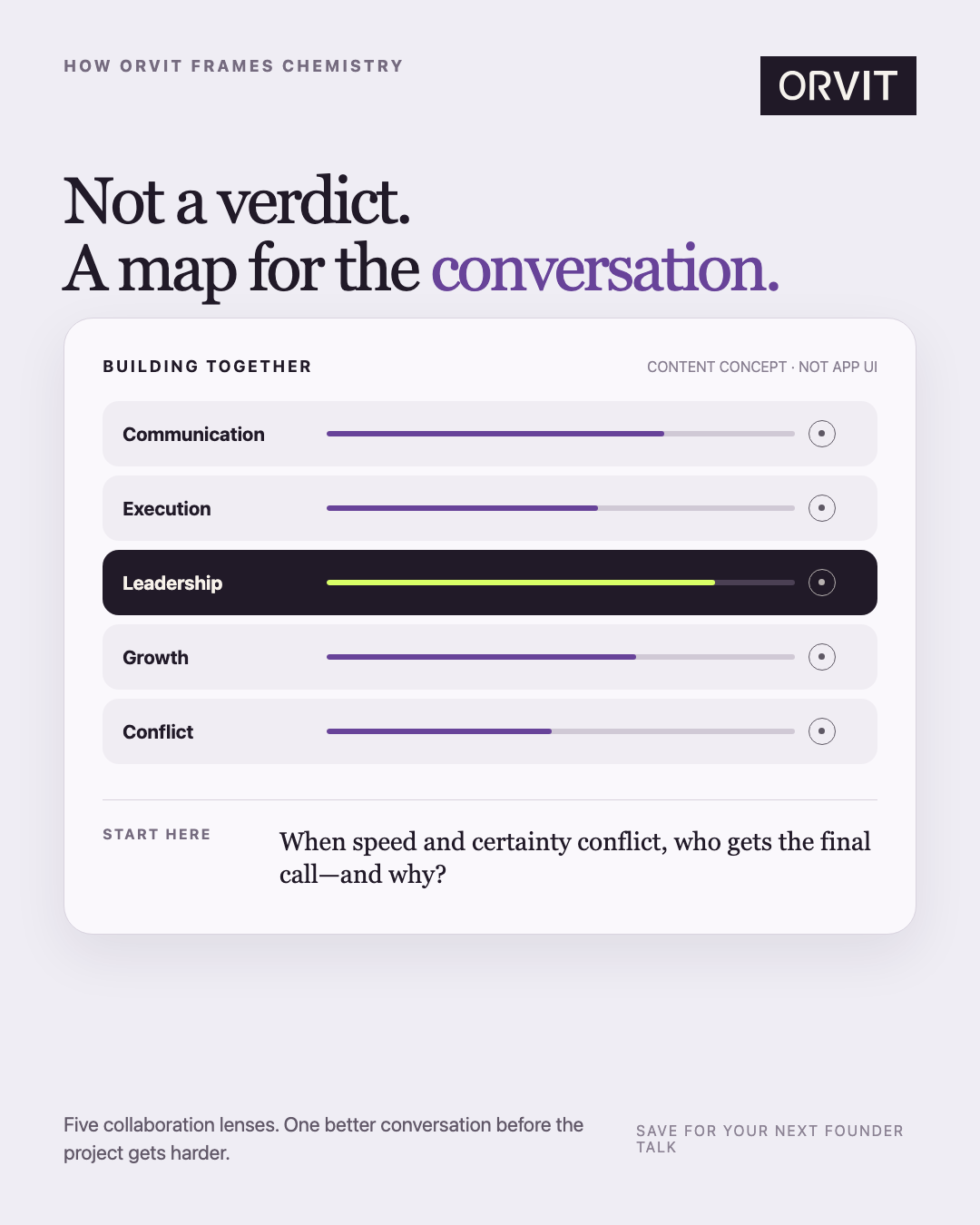
It will not tell you whether to commit, and it is not a substitute for the trial project. What it does is tell you which conversation to have first — and that is usually where the time goes. More in the FAQ.
New to the term? We wrote the full definition: what an ORVIT Founder Type is, how it is calculated, and what it cannot tell you.
Questions people ask
How long should this take?
Most founding pairs who last spent one to three months from first conversation to commitment, including a trial. Faster than that and you are guessing; much slower and you are usually avoiding a decision you have already made.
Should I look for someone with the same skills as me?
No. Look for someone who covers what you are bad at and shares how you define success. Overlapping skills feel comfortable and leave the same holes unfilled.
What if I only have an idea, not a product?
Then build the smallest possible version first, alone. "I have the idea, I need someone to build it" is the single least effective outreach message in existence, because it offers a partner all of the work and none of the proof.
Is it a bad sign if they are talking to other people too?
No — it is a good one. Someone evaluating several options is doing exactly what you should be doing. Be wary of the opposite: a person who commits to you in week one has probably done that before.
The short version
- Run two or three channels in parallel, not one
- Screen for complementary skills, shared definition of success, evidence they finish
- Keep the first message to four sentences and a small ask
- Run a two-week trial with separate ownership and one real deadline
- Have one disagreement on purpose before you commit
- Take one to three months, not one week
Finding a cofounder is mostly a filtering problem, and filters only work if you are willing to use them. The founders who end up with good partners are rarely the ones who met the most people — they are the ones who said no faster.
Start with how you build
See your ORVIT Founder Type and explore how you and a potential cofounder may work together.
Get ORVIT